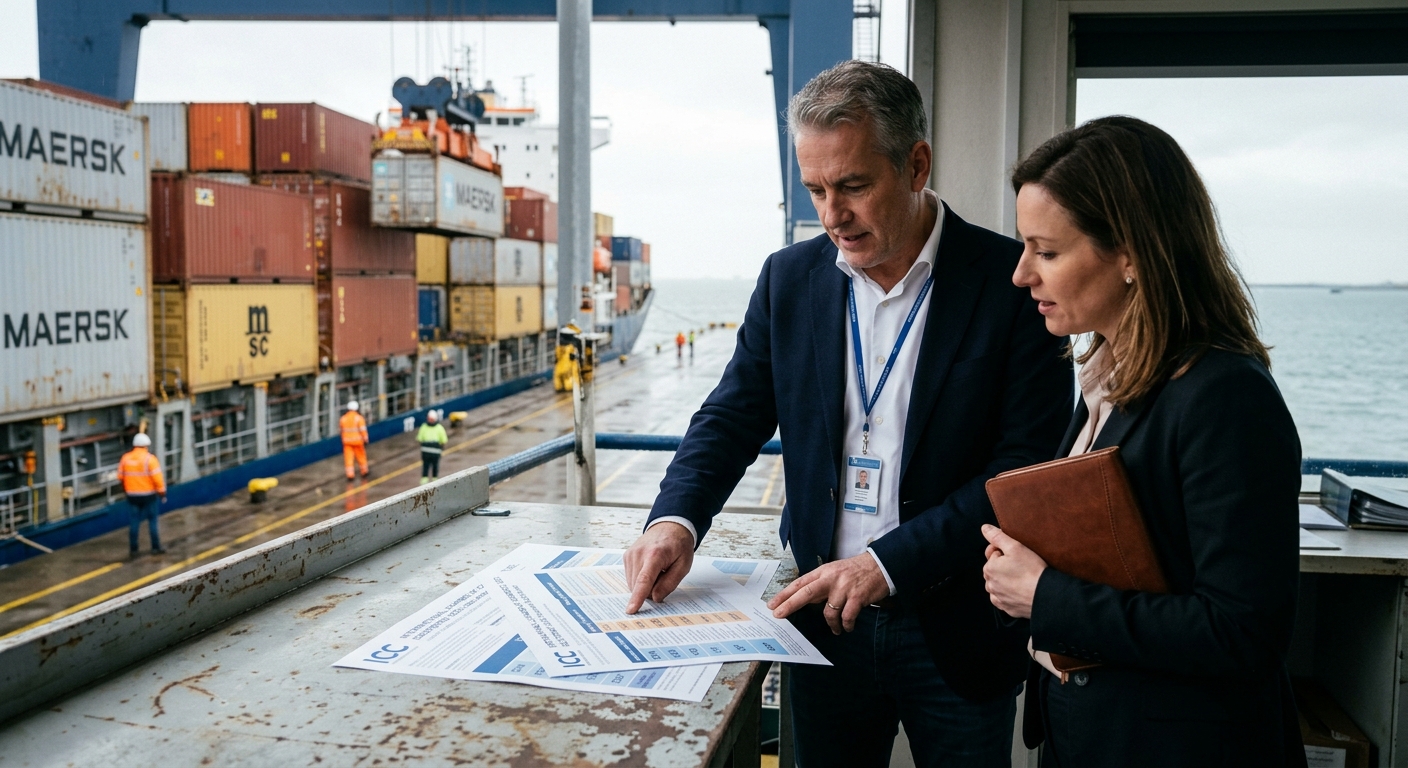
Introduction to Incoterms in B2B Trade
In the complex world of global business, clarity is essential. When buyers and sellers engage in international transactions, they must clearly define who is responsible for the goods during transit, who pays the shipping costs, and who bears the risk of loss or damage. This is where Incoterms, short for International Commercial Terms, come into play. Created by the International Chamber of Commerce (ICC), these universally recognized rules simplify global transactions and reduce the risk of costly misunderstandings.
Understanding Incoterms is crucial for any business involved in cross-border trade. Whether you are importing raw materials or exporting finished products, selecting the appropriate term can significantly impact your bottom line, supply chain efficiency, and legal liability. To navigate these waters effectively, businesses should also consult B2B Trade Compliance for Beginners: A Comprehensive Guide to ensure they are meeting all regulatory requirements.
What Are Incoterms?
Incoterms are a set of 11 standardized rules that define the responsibilities of buyers and sellers for the delivery of goods under sales contracts. They dictate:
- Tasks: Who is responsible for arranging transport, loading and unloading, and securing insurance.
- Costs: Who pays for freight, insurance, taxes, and duties.
- Risks: The exact point in the journey where the risk of loss or damage transfers from the seller to the buyer.
It is important to note that Incoterms do not cover ownership transfer, payment terms, or breach of contract. For payment considerations, you can refer to A Complete Guide to International B2B Payment Methods. The current version, Incoterms 2020, reflects modern commercial practices and provides clearer guidelines on security-related obligations and insurance coverage.
The 11 Incoterms of 2020
The 11 rules are divided into two main categories based on the mode of transport. Here is a breakdown of the terms.
Rules for Any Mode or Modes of Transport
- EXW (Ex Works): The seller fulfills their obligation when they place the goods at the disposal of the buyer at the seller's premises. The buyer bears all costs and risks from that point onward.
- FCA (Free Carrier): The seller delivers the goods to the carrier or another person nominated by the buyer at the seller's premises or another named place.
- CPT (Carriage Paid To): The seller pays for the carriage of the goods up to the named place of destination. Risk transfers to the buyer when the goods are handed over to the first carrier.
- CIP (Carriage and Insurance Paid To): Similar to CPT, but the seller is also required to procure extensive insurance coverage against the buyer's risk of loss or damage to the goods during carriage.
- DAP (Delivered at Place): The seller bears all risks and costs associated with delivering the goods to the named place of destination, ready for unloading.
- DPU (Delivered at Place Unloaded): The seller bears all risks and costs until the goods are unloaded at the named place of destination. This is the only term that requires the seller to unload the goods.
- DDP (Delivered Duty Paid): The seller bears all costs and risks involved in bringing the goods to the place of destination, including import duties and taxes. This represents the maximum obligation for the seller.
Rules for Sea and Inland Waterway Transport
- FAS (Free Alongside Ship): The seller delivers when the goods are placed alongside the vessel nominated by the buyer at the named port of shipment.
- FOB (Free On Board): The seller delivers the goods on board the vessel nominated by the buyer at the named port of shipment. Risk transfers once the goods are on board.
- CFR (Cost and Freight): The seller pays the costs and freight necessary to bring the goods to the named port of destination, but the risk transfers to the buyer when the goods are placed on board the vessel at the port of shipment.
- CIF (Cost, Insurance, and Freight): Similar to CFR, but the seller also contracts for insurance cover against the buyer's risk of loss or damage to the goods during the carriage.
How to Choose the Right Incoterm
Selecting the correct Incoterm requires a careful analysis of your company's capabilities, the nature of the goods, and the destination country's regulations. Consider the following factors:
- Control vs. Convenience: If you want maximum control over shipping costs and routes, opt for terms like EXW or FCA (as a buyer) or CPT/CIP (as a seller). If you prefer convenience and less logistical hassle, DDP might be better for a buyer.
- Risk Tolerance: Assess where you are comfortable assuming the risk of loss or damage. Terms like FOB and CIF shift risk at the port of origin, while DAP and DDP shift it at the destination.
- Customs Expertise: DDP requires the seller to handle import clearance, which can be complex in certain countries. If the seller lacks this expertise, DAP or DPU might be safer alternatives.
For additional resources and global market insights, consider visiting a global B2B directory to connect with reliable partners who understand these international standards.
Summary of Key Differences
The following table provides a simplified overview of cost and risk transfer for common Incoterms:
| Incoterm | Freight Costs Paid By | Risk Transfers At | Insurance Required By Term |
|---|---|---|---|
| EXW | Buyer | Seller's Premises | No |
| FOB | Buyer | On Board Vessel (Origin) | No |
| CIF | Seller | On Board Vessel (Origin) | Yes (Seller) |
| DDP | Seller | Destination (Ready for Unloading) | No |
Conclusion
Understanding Incoterms is fundamental to successful B2B international trade. By clearly defining the responsibilities, costs, and risks associated with global shipping, businesses can avoid disputes, accurately calculate landed costs, and optimize their supply chains. Always ensure that the chosen Incoterm is explicitly stated in the sales contract, along with the named place and the version year (e.g., "FOB Shanghai, Incoterms 2020"). Taking the time to master these terms will ultimately lead to more secure, efficient, and profitable trading relationships.
Frequently Asked Questions (FAQ)
What happens if an Incoterm is not included in a contract?
If an Incoterm is missing, the responsibilities, costs, and risk transfers will be determined by the general laws governing the contract or the United Nations Convention on Contracts for the International Sale of Goods (CISG). This often leads to disputes and unexpected costs for both parties.
Are Incoterms legally binding?
Incoterms are not laws themselves; they are standardized guidelines. However, once an Incoterm is incorporated into a written sales contract by mutual agreement, it becomes legally binding for that specific transaction.
Can Incoterms be modified or customized?
Yes, parties can agree to modify the standard Incoterms to fit their specific needs, provided the changes are clearly articulated and agreed upon in the contract. However, extreme modifications can defeat the purpose of using standardized terms and may cause confusion.
Which Incoterm is best for an inexperienced buyer?
For buyers who are new to international trade and want to minimize their logistical responsibilities and risks, DAP (Delivered at Place) or DDP (Delivered Duty Paid) are often recommended, as the seller handles most of the transportation and, in the case of DDP, the import customs clearance.
Comments
Post a Comment