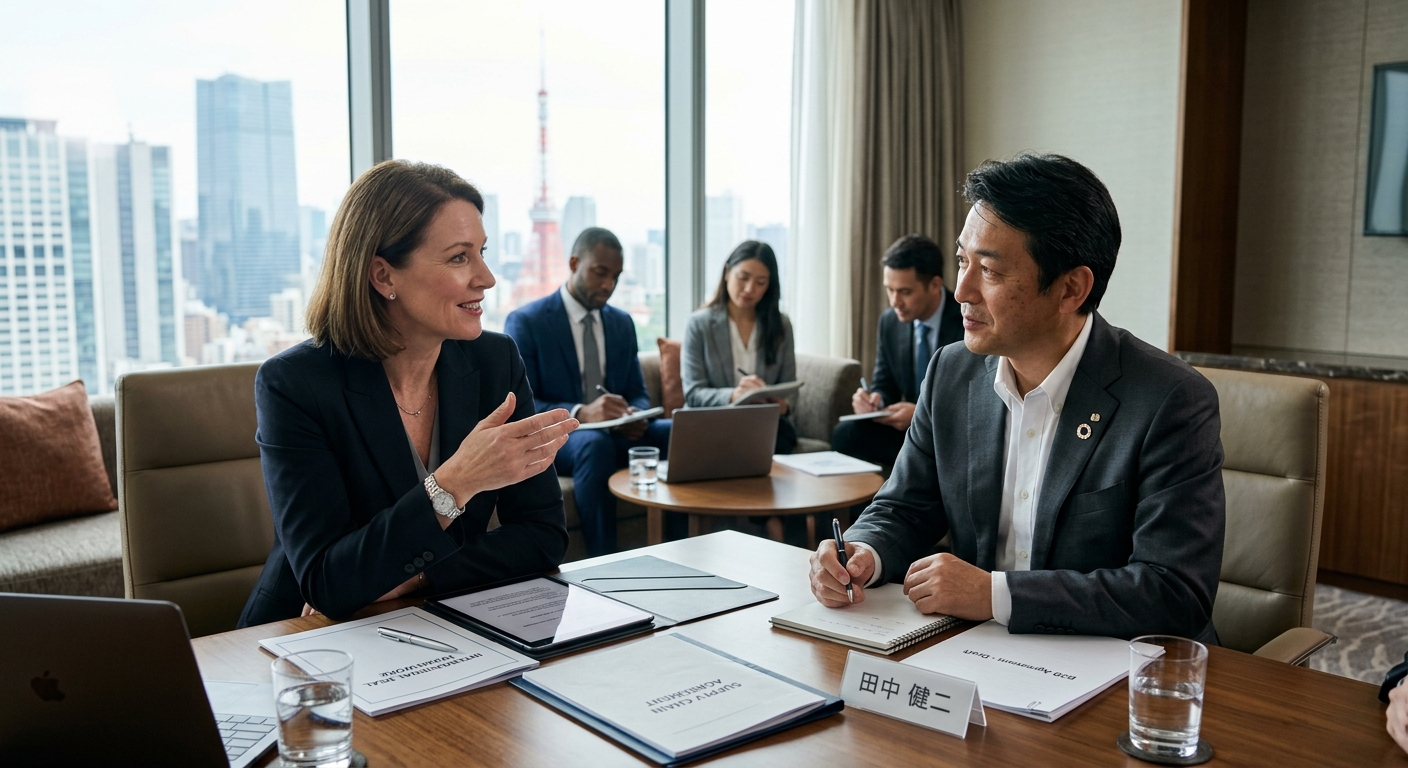
Introduction to International B2B Negotiations
In today's interconnected global economy, expanding your business across borders is more accessible than ever. However, navigating the complexities of cross-border trade requires a nuanced approach, particularly when it comes to business-to-business (B2B) negotiations. Unlike local deals, international B2B negotiations involve diverse cultural backgrounds, differing legal frameworks, fluctuating currencies, and complex logistical supply chains. Successfully closing an international deal means building long-term trust while protecting your company's financial and legal interests.
Mastering international negotiations is not just about securing the lowest price or the fastest delivery; it is about creating sustainable, mutually beneficial partnerships. Whether you are dealing with a manufacturing powerhouse in Asia, a tech firm in Europe, or a distributor in South America, understanding the fundamental principles of global trade negotiation is essential for long-term success. If you are new to the field of cross-border commerce, familiarizing yourself with foundational concepts is crucial. For instance, reviewing A Comprehensive Beginner's Guide to Import and Export can give you the baseline knowledge required before you even sit at the negotiation table.
Understanding Cultural Nuances and Communication Styles
One of the most significant barriers to successful international negotiations is cultural misunderstanding. What is considered standard business practice in one country might be deeply offensive in another. Business cultures generally fall into two categories: high-context and low-context cultures.
- Low-Context Cultures: Countries like the United States, Germany, and the Netherlands rely on explicit, direct communication. In these cultures, negotiations are often fast-paced, legally binding documents are highly detailed, and business is strictly separated from personal relationships.
- High-Context Cultures: In countries such as Japan, China, and many Middle Eastern nations, communication is more implicit. Trust and personal relationships (such as the Chinese concept of 'Guanxi') must be established long before any formal business is discussed. Rushing a deal in a high-context culture is often perceived as aggressive and untrustworthy.
When preparing for an international negotiation, you must adapt your communication style to match your counterpart. Take time to learn appropriate greetings, the significance of business card exchanges, and attitudes toward punctuality. Understanding whether your counterpart views time as linear (monochronic) or fluid (polychronic) will prevent frustration when meetings inevitably run over their allotted time.
Thorough Preparation and Strategic Planning
International negotiations require rigorous preparation. Before you engage with a potential foreign partner, you must clearly define your goals, your Best Alternative to a Negotiated Agreement (BATNA), and your Zone of Possible Agreement (ZOPA). This preparation ensures you do not make costly concessions under pressure.
You must also conduct comprehensive market research. Understand the regulatory environment, tariffs, and customs duties of your partner's country. Familiarize yourself with standard Incoterms (International Commercial Terms), which dictate who is responsible for shipping, insurance, and risk at various stages of the supply chain. When engaging in global B2B trade, failing to properly define Incoterms can lead to disputes over damaged goods or unexpected freight charges.
Structuring the Deal: Financial and Payment Terms
Perhaps the most critical phase of an international B2B negotiation is agreeing on payment terms. Dealing with multiple currencies introduces exchange rate risk, while long transit times create cash flow challenges. Your goal is to secure payment methods that protect your bottom line while remaining attractive to your overseas partner.
Standard options include advance payment, Letters of Credit (LCs), documentary collections, and open account terms. Letters of Credit offer excellent security for both buyers and sellers but come with high bank fees and stringent documentation requirements. Conversely, open accounts are highly favorable for buyers but present significant risks for sellers. To navigate these financial waters effectively, it is highly recommended that you consult A Complete Guide to International B2B Payment Methods, which outlines the pros and cons of each mechanism and helps you mitigate financial risks.
Building Trust and Drafting the Contract
In global B2B environments, the contract is just the beginning. While Western companies view a signed contract as the final word, many other cultures view it as a fluid document that reflects the beginning of a relationship subject to changing circumstances. Therefore, negotiations should focus as much on relationship-building as on legal terms.
When drafting the contract, be explicit about dispute resolution. Include clauses that specify the governing law and the jurisdiction where disputes will be settled. International arbitration is often preferred over local litigation, as it provides a neutral ground and more enforceable awards under treaties like the New York Convention. Ensure that the contract is translated accurately and that both parties have a shared understanding of all technical and legal terms.
The Stages of International Negotiation
| Negotiation Stage | Primary Focus | Desired Outcome |
|---|---|---|
| 1. Preparation | Market research, setting BATNA, identifying cultural norms. | A clear strategy and defined acceptable terms. |
| 2. Relationship Building | Socializing, establishing trust, learning communication styles. | A solid interpersonal foundation for business discussions. |
| 3. Information Exchange | Sharing needs, expectations, and capabilities. | Mutual understanding of what each party brings to the table. |
| 4. Persuasion & Bargaining | Discussing pricing, Incoterms, and payment methods. | Compromise and alignment within the ZOPA. |
| 5. Concession & Agreement | Finalizing legal details, signing contracts. | A legally binding, mutually beneficial partnership. |
Conclusion
Negotiating international B2B agreements is a multifaceted process that demands a blend of cultural intelligence, strategic foresight, and financial acumen. By investing time in understanding your partner's cultural background, thoroughly preparing your negotiation strategy, and carefully structuring your payment and legal terms, you can bridge the geographical divide. Remember that the ultimate goal of an international negotiation is not to win a single transaction, but to forge a durable, trusting partnership that yields ongoing profitability for both parties. Stay patient, be adaptable, and always prioritize clear, respectful communication.
Frequently Asked Questions (FAQ)
What is the most common mistake in international B2B negotiations?
The most common mistake is assuming that business is conducted the same way globally as it is domestically. Failing to adapt to the cultural nuances, communication styles, and relationship-building expectations of a foreign partner can instantly derail a potential deal.
How should I handle language barriers during negotiations?
If neither party shares a fluent common language, it is highly advisable to hire a professional, neutral interpreter who understands the technical terminology of your industry. Additionally, always follow up verbal discussions with written summaries to ensure mutual comprehension and avoid costly misunderstandings.
Why are Incoterms important in global negotiations?
Incoterms are internationally recognized rules that define the responsibilities of buyers and sellers regarding the delivery of goods. Negotiating the correct Incoterm determines who pays for freight, who handles customs clearance, and who bears the risk of loss during transit, directly impacting the overall cost and risk of the deal.
What is the safest payment method for a seller in an international B2B deal?
Cash in advance is the safest method for sellers, but it is rarely acceptable to buyers. The most balanced and secure method for both parties is typically a Letter of Credit (LC), where the buyer's bank guarantees payment to the seller provided that all shipping and documentation conditions are met exactly as agreed.
Comments
Post a Comment